您想继续阅读英文文章还
是切换到中文?
是切换到中文?

THINK ALUMINIUM THINK AL CIRCLE

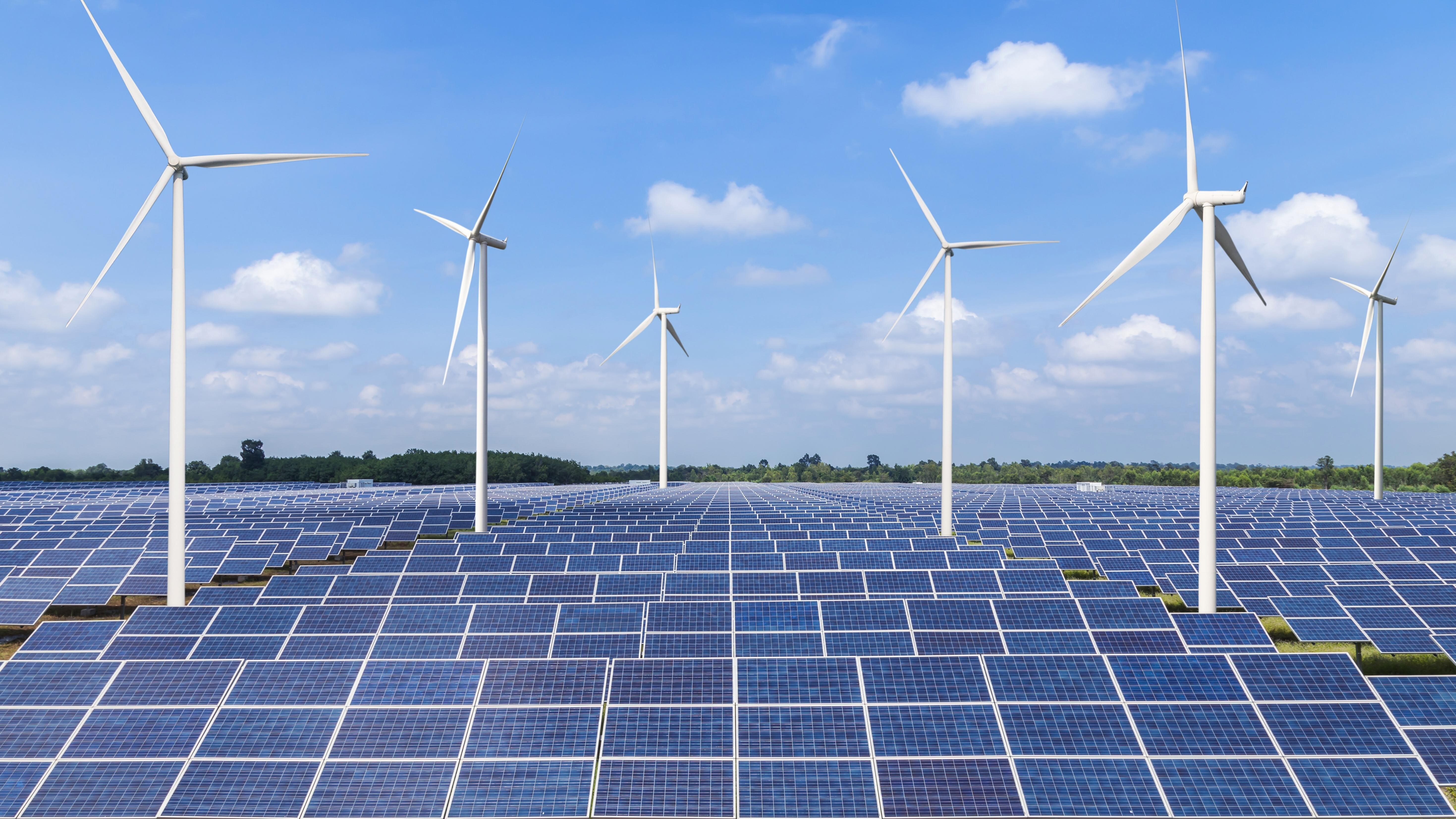
Stock image for referential purposes only
The share of natural gas in global electricity generation fell for the fifth year in a row in 2025, as renewable energy, led by solar power, played a bigger role in meeting rising power demand.
{alcircleadd}21.8 per cent of global electricity generation in 2025 was made up of gas, down from 23.9 per cent in 2020. Gas-fired power still grew in total, but at a slower rate than solar and wind.
The shift towards renewable energy is important for energy-heavy industries like aluminium. The smelters are rapidly using solar and wind power to cut emissions. Alongside this, more usage of solar and wind power equals more demand for aluminium.
Think tank Ember reports that gas-fired generation expanded at an average annual rate of 1.6 per cent from 2021 to 2025, down from 2.9 per cent annually between 2016 and 2020. In 2025, global gas generation increased by just 38 TWh (0.6per cent), while solar generation grew by 636 TWh (about 17 times the gain in gas).
Solar power alone met about 75 per cent of global electricity demand growth in 2025, while gas contributed less than 5 per cent, according to the report.
Over the past five years, clean energy sources led by solar and wind accounted for around 68 per cent of the growth in global electricity demand, reducing the need for additional gas-fired generation.
Ember senior electricity analyst Malgorzata Wiatros-Motyka said, “The economics and energy security case for electricity are increasingly moving in the same direction.”
She noted that renewables help lower costs while reducing exposure to fuel price volatility and geopolitical disruptions, factors that have traditionally supported the use of gas in power generation.
The report found that 61 out of 124 economies generating electricity from gas had already passed their peak gas generation levels by 2025. Together, these countries accounted for about one-fifth of global gas-fired electricity generation.
Japan recorded the largest decline from its peak, with gas generation falling by 127 TWh. It was followed by the United Kingdom with a decline of 85 TWh, India with 69 TWh, Spain with 59 TWh and Italy with 48 TWh.
For forward-thinking aluminium market insights amidst supply chain and price challenges, read "ALuminium LeaderSpeak 2026"
In India, gas-fired electricity generation peaked in 2010 at 118 TWh, representing 12.6 per cent of the country's electricity mix. By 2025, gas generation had declined to 49 TWh, representing just 2.3 per cent of total electricity output.
Brazil also saw gas-produced electricity drop from 13.7 per cent in 2014 to 7.3 per cent in 2025. China kept gas at about 3 per cent of its power mix in 2025 despite rapid demand growth, with gas-fired plants generating 334 TWh. Together, India, China and Brazil accounted for roughly 42 per cent of global electricity demand in 2025, yet they met the increase without significantly raising gas use.
Gas-fired electricity generation has also levelled off in G7 countries. According to Ember, the G7 accounted for 37 per cent of global gas-fired generation in 2025, with the United States alone contributing 26 per cent.
However, gas generation across the G7 fell from 2,627 TWh in 2024 to 2,577 TWh in 2025, a decline of 50 TWh.
Gas's share of the G7 electricity mix dropped from 34.3 per cent to 32.9 per cent during the year, marking the second consecutive annual decline.
At the same time, renewable generation reached 2,544 TWh, nearly matching gas-fired output and helping clean energy overtake fossil fuels in the G7 electricity mix.
The United Kingdom, Germany, Italy and Japan, all of which rely on imported gas, have remained below their historical peak gas generation levels for at least five consecutive years.
The report said recent geopolitical events have accelerated the shift away from gas by highlighting the risks associated with fuel imports.
The geopolitical tension between Russia and Ukraine in 2022 disrupted gas supplies and triggered sharp price increases, prompting faster deployment of renewable energy across Europe and parts of Asia.
More recently, disruptions to liquefied natural gas supplies linked to the 2026 West Asia conflict have reinforced concerns about fuel security and price volatility.
According to Wiatros-Motyka, “Countries are increasingly turning to renewables because they are domestically available, more price stable and faster to deploy.”
Despite the decline in gas's share of electricity generation, Ember said global gas-fired power generation has not yet reached its peak.
Growth is becoming increasingly concentrated in a small number of major markets, particularly the United States.
To know the long-term bauxite market forecast, book our report: “Global Bauxite & Alumina Market Forecast to 2036: Supply–Demand, Trade Flows & Price Outlook”
Between 2015 and 2025, the United States recorded the largest increase in gas-fired generation, adding 474 TWh, equivalent to nearly one-third of total global gas growth during the period.
Gas's share of the US electricity mix increased from 33 per cent to 40 per cent, while coal's share fell from 33 per cent to 16 per cent.
As a result, global gas demand trends remain heavily influenced by a limited number of large economies even as many countries reduce their dependence on the fuel.
Ember said the future role of gas is likely to shift from being a major source of electricity growth to serving as a balancing resource in power systems with increasing shares of renewable energy.
The report highlighted the importance of continued investment in renewable generation, transmission infrastructure, battery storage and other flexibility solutions to support growing electricity demand while reducing reliance on imported fossil fuels.
According to Ember, nearly half of the world's gas-generating economies have already moved beyond their peak gas generation levels. With renewable technologies continuing to expand rapidly, the world may be moving closer to a peak in global gas-fired electricity generation.

Responses







_0_0.jpg/500/0)